Biggest Workforce Wf 2830 Buying Mistakes (And How to Avoid Them)
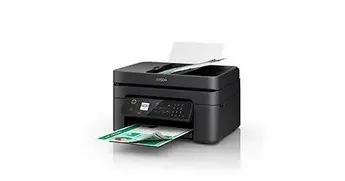
The Epson WorkForce WF-2830 is a popular entry-level All-in-One printer designed primarily for home offices and small business environments. Its compact footprint, combined with features like an Automatic Document Feeder (ADF) and wireless connectivity, makes it an attractive proposition for those seeking a balance between price and functionality. However, because it sits at a budget-friendly price point, many consumers approach the purchase with a lack of preparation, leading to long-term frustration and unexpected costs. Selecting the right printer is not just about the upfront price tag; it is about localizing a machine that aligns with specific volume needs, maintenance expectations, and connectivity requirements. This guide explores the common pitfalls buyers face when selecting the WF-2830 and provides a deep dive into its capabilities to ensure you make an informed decision.
Misunderstanding the Budget Printer Landscape
The most significant mistake buyers make when considering the WorkForce WF-2830 is viewing the low initial cost as the total cost of ownership. In the world of inkjet printers, machines like the WF-2830 are often sold at narrow margins, with the manufacturer's profit model being heavily dependent on subsequent ink sales. This is a critical distinction that many home office users overlook. If you are printing hundreds of pages a week, a budget printer can quickly become more expensive than a high-end laser printer or an ink-tank system within just six months of use. Avoiding this mistake requires a realistic assessment of your monthly print volume. The WF-2830 is designed for "moderate" use, meaning it excels for those who print a dozen or so pages a week but may struggle under the weight of high-volume administrative tasks.
Detailed Product Analysis: The WorkForce WF-2830
To understand why certain buying mistakes happen, one must look at the technical architecture of the WorkForce WF-2830. This unit is a thermal inkjet printer that utilizes a four-cartridge system (Cyan, Magenta, Yellow, and Black). This individual cartridge setup is actually a step up from budget printers that use a single "tri-color" cartridge, as it prevents you from having to throw away an entire cartridge just because you ran out of one color. However, the cartridges themselves are relatively small in capacity.
In terms of performance, the WF-2830 offers a print resolution of up to 5760 x 1440 optimized dpi, which is impressive for a machine in this class. It can produce crisp text and surprisingly decent color graphics for presentations and school projects. The integration of a 30-page Automatic Document Feeder (ADF) is one of its strongest selling points. Many buyers assume all printers in this price range have an ADF, but many only offer a flatbed scanner. The ADF allows for multi-page scanning and copying without manual intervention, which is a massive time-saver for small business owners handling contracts or invoices.
Connectivity is another area where users often stumble during the set-up phase. The WF-2830 supports Wi-Fi, Wi-Fi Direct, and USB connections. It is compatible with Epson Connect, Apple AirPrint, and Google Cloud Print (though service support for the latter has evolved). The mistake here is often assuming the printer supports 5GHz Wi-Fi bands. Like many IoT and home office devices, the WF-2830 primarily operates on the 2.4GHz band. Users with modern mesh routers that force a 5GHz connection may encounter initial handshake issues if they aren't prepared to troubleshoot their network settings.
The Ink Management Pitfall
Buyers frequently ignore the "Yield" ratings of the 212 and 212XL ink cartridges used by this model. Standard 212 cartridges are rated for approximately 150 pages of black text and 130 pages of color. For a student printing a thesis or a realtor printing high-resolution flyers, these cartridges will deplete rapidly. The "buying mistake" here is not factoring in the cost of high-capacity (XL) cartridges or investigating Epson's ReadyInk subscription service, which can mitigate some of the high per-page costs if used correctly. Furthermore, this printer is designed to work exclusively with genuine Epson-brand cartridges. Users who buy this machine with the intent of using third-party "knock-off" inks often find that firmware updates can disable the use of non-genuine supplies, leading to a "bricked" printer experience.
Pros and Cons of the WorkForce WF-2830
- Pro: Space-Saving Design. The compact footprint is ideal for cramped home offices or dorm rooms where desk real estate is at a premium.
- Pro: Automatic Document Feeder. The 30-page ADF is a professional-grade feature rarely found at this specific price point, making it excellent for scanning multi-page documents.
- Pro: Individual Ink Cartridges. Being able to replace only the color you need helps reduce waste compared to tri-color cartridge systems.
- Pro: Auto-Duplexing. The ability to print on both sides of the paper automatically helps save on paper costs and creates more professional-looking documents.
- Con: High Ink Costs. The cost per page is significantly higher than that of laser printers or "SuperTank" printers, especially for color-heavy documents.
- Con: Smaller Paper Tray. With a 100-sheet input capacity, users who print frequently will find themselves refilling the tray often.
- Con: Moderate Speed. At roughly 10 pages per minute (ppm) for black and 4.5 ppm for color, it is not built for speed-intensive environments.
Comparison: WF-2830 vs. Alternatives
To help visualize where the WF-2830 sits in the market, the following table compares it to two common categories of alternatives: the ultra-budget home printer and the mid-range business inkjet.
Find top-rated Electronics products at great prices.
View Offers →| Feature | WorkForce WF-2830 | Basic Home Inkjet | Mid-Range Pro Inkjet |
|---|---|---|---|
| Automatic Document Feeder | Yes (30-Sheet) | No (Flatbed Only) | Yes (50-Sheet/Duplex) |
| Ink System | 4 Individual Cartridges | 2 Cartridges (Black/Tri-Color) | 4 High-Yield Cartridges |
| Auto 2-Sided Printing | Yes | Manual Only | Yes (High Speed) |
| Monthly Duty Cycle | Up to 3,000 Pages | Up to 1,000 Pages | Up to 20,000 Pages |
| Paper Capacity | 100 Sheets | 50-60 Sheets | 250+ Sheets |
Buying Guide: Key Considerations for Success
To avoid the most common buying mistakes, potential owners should follow a checklist that prioritizes workflow over the initial sticker price. By answering the following questions, you can determine if the WF-2830 is actually the right tool for your specific needs.
1. Evaluate Your Monthly Volume
If you find that you are printing more than 100 pages a month, you are likely in the "danger zone" for a budget inkjet. A "danger zone" user is someone who spends more on ink in a single year than they spent on the printer itself. For these users, an Epson EcoTank or a monochrome laser printer would likely be a better investment. The WF-2830 is perfect for the "occasional" professional—someone who needs to print a shipping label, scan a few signed contracts, and print a child's homework occasionally.
2. Analyze Your Scanning Needs
One of the biggest mistakes is buying a printer without an ADF when you regularly scan multi-page documents. If you are a lawyer, accountant, or small business owner, the 30-page ADF on the WF-2830 is a non-negotiable benefit. However, note that the WF-2830 ADF does not usually support "single-pass duplex scanning" (scanning both sides of a page at once). If you have two-sided documents to scan, you will still need to flip them manually or look for a higher-tier model like the WF-3820 or WF-4830.
3. Connectivity and Mobile Integration
Buyers often overlook the utility of mobile apps. The Epson Smart Panel app is quite robust, allowing you to print from your phone, check ink levels, and even perform maintenance tasks like head cleaning. A common mistake is not installing the manufacturer’s specific software and relying only on generic Windows or macOS drivers. Using the specific Epson drivers unlocks features like specialized "Quiet Mode" and more granular paper handling settings that the generic OS drivers might lack.
4. Paper Handling and Media Types
Are you planning to print on cardstock or envelopes? The WF-2830 can handle various media, but it is primarily a plain-paper machine. It lacks the rear-feed slot often found on photo-centric printers, which allows for thicker media that can't easily bend around the internal rollers. If your business requires frequent printing on heavy cardstock or specialized labels, the internal 100-sheet tray's tight "U-turn" paper path might lead to frequent jams or curled edges.
Real-World Use Cases
Understanding where the WF-2830 fits into real life can help you avoid the "wrong tool for the job" mistake. Let's look at three typical buyer profiles:
Find top-rated Electronics products at great prices.
See Deals →The Remote Professional / Freelancer
A freelance writer or consultant who occasionally needs to sign, scan, and send back a non-disclosure agreement will find the WF-2830 to be an excellent value. The ADF makes the scanning process professional, and the occasional color print will not break the bank in ink costs. In this scenario, the WF-2830 is a smart purchase.
The High-Volume Student
A college student who needs to print 50-page readings twice a week will find the WF-2830 frustrating. The small paper tray will need constant refilling, and the speed will feel sluggish when rushing to a 9:00 AM class. Furthermore, the ink costs will erode a student budget quickly. In this scenario, a basic monochrome laser printer is often the better choice.
The Craft and Hobbyist User
Someone looking to print high-quality photos on heavy glossy paper or create iron-on transfers might be disappointed. While the resolution is high, the ink type used in the 212 series is more optimized for office documents than professional photography. The lack of a flat-path rear feeder makes heavy photo paper difficult to use. A dedicated photo printer or tank-based system would be more appropriate here.
Avoiding the "Maintenance Neglect" Mistake
Many buyers of the WF-2830 report issues with "clogged print heads" after a few months. This is often not a fault of the printer itself, but a mistake in how inkjet technology is managed. Inkjet printers use liquid ink, which can dry up if the machine is left powered off for weeks at a time. The WF-2830 has a self-cleaning cycle, but it can only run if the printer is left in "Sleep Mode" rather than being completely unplugged. A major mistake is keeping the printer in a drawer or a closet and only pulling it out once every two months; the ink in the nozzles will likely dry, leading to streaks and wasted ink during forceful cleaning cycles. To avoid this, print at least one test page every week to keep the ink flowing.
Conclusion
The Epson WorkForce WF-2830 is a highly capable machine that punches above its weight class in terms of features, particularly with its Automatic Document Feeder and duplex printing capabilities. The "biggest mistakes" associated with this model almost always stem from a mismatch between the user's expectations and the inherent limitations of budget inkjet technology. By avoiding the pitfalls of underestimated ink costs, misaligned print volumes, and poor connectivity preparation, you can ensure that this printer serves as a reliable partner in your home office rather than a source of recurring frustration. When used for its intended purpose—moderate, professional-quality tasks—the WF-2830 remains one of the most cost-effective entries into the all-in-one market. Success with this model simply requires a shift in perspective: stop looking at the price on the box and start looking at the demands of your daily workflow.