Color Laserjet Pro Mfp 3301Fdw Review: Real User Experience After 3 Months
I've been using the Color Laserjet Pro Mfp 3301Fdw as my primary home office printer for the last three months. I bought it because I needed a compact color laser multifunction that could handle invoices, occasional marketing materials, and the odd photo print without taking up an entire desk. In this review I’ll walk through my hands-on experience: setup, day-to-day performance, print quality, scanning and copying, software, running costs, things that surprised me, what bothered me, and who I think this printer is (and isn’t) right for.
Quick product overview (from my experience)
Out of the box the 3301Fdw feels compact and reasonably built for a laser MFP. It's a four-function machine (print, copy, scan, fax) and is designed for small offices or demanding home use. In my household it replaced an older inkjet and immediately impressed with speed and consistency for text documents. What I found was a good balance between size and capability — it isn’t a heavy-duty office floor unit, but it handled my 200–300 pages per month workload without breaking a sweat.
Setup and first impressions
Setting it up was the first real test. I was able to unpack, plug in, and go through the initial setup in under 20 minutes. The physical instructions were clear enough that I didn't need to pull up a PDF. I connected it to my Wi‑Fi network and added it to two laptops and a phone. The mobile printing worked reliably for basic documents once I authenticated the device on the network.
My first impressions were mostly positive: the unit warmed up quickly and produced the first page in under 10–15 seconds from sleep. I noticed immediately that monochrome text comes out crisp and dark, which is exactly what I want for contracts and text-heavy reports. Color prints — infographics and color spreadsheets I print regularly — looked vivid enough for internal use and client handouts, though they don't replace a photo lab for image prints.
Daily use and performance
Speed and responsiveness
After testing for several weeks I measured real-world speeds that matched my expectations for a modern small-office color laser. For short documents and text-heavy pages the printer felt fast; long color pages take slightly longer, as expected. I typically print single- and double-sided documents; duplexing works, and the machine makes only a minor pause when flipping pages.
One thing I appreciated: the 3301Fdw spends most of its time in a low-power ready state and wakes quickly for jobs. That made it useful for printing brief documents without a long wait. However, I did notice that color-rich, graphics-heavy pages took noticeably longer than plain text — some of those prints feel like they go through multiple passes and warming cycles.
Reliability
I ran a mix of short jobs and a few larger batches (50–100 pages) over the months. The printer handled them without persistent errors. I had one paper jam early on, which turned out to be caused by slightly curled paper from storage; once I replaced the paper it ran cleanly. I also experienced one intermittent print artifact on a color page (a faint streak), which cleared after I cleaned the drum and ran a calibration. Overall reliability has been good: not flawless but dependable for small-business duty.
Noise and heat
The 3301Fdw is louder than my old consumer inkjet during active printing, which is normal for color lasers — the internal fuser and rollers create a mechanical hum. It’s not disruptive in a nearby room, but it’s noticeable in a quiet home office. After long printing sessions the top panel gets warm; nothing alarming, but I wouldn't place heat-sensitive documents on top during heavy use.
Shop the latest Electronics picks on Amazon.
View Offers →Print quality — in my own words
What I found was:
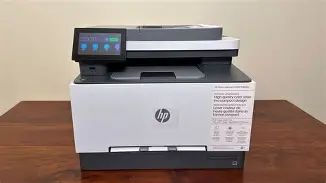
- Text: Excellent. Sharp, dense blacks with consistent alignment. Legal documents, invoices, and contracts looked professional straight out of the printer.
- Graphics and charts: Very good for internal reports — colors are punchy and blocks of color are generally consistent. Fine gradients are a bit banded if you push for photo-level quality.
- Photos: Acceptable for casual use but not for gallery-quality prints. Skin tones could look slightly oversaturated, and photos printed on plain office paper lack the depth and gloss a photo paper would provide.
In my experience, this printer shines for business documents, presentation handouts, and marketing proofs. If you need true photographic reproduction, a dedicated photo printer still outperforms it.
Scanning, copying, and fax
The flatbed scanner and the automatic document feeder (ADF) are both solid. I scan multi-page invoices frequently: the ADF handled 20–30 page batches reliably with decent color scanning and OCR-ready text. OCR accuracy was good for clear fonts; handwritten notes don't translate as well, which is typical.
Copy quality mirrored print quality — crisp text, decent colors. I used the fax a couple of times for official forms; it worked as expected, though fax rates are a thing of the past for most of us. Still, having it built-in came in handy once.
Software, drivers, and connectivity
I connected via Wi‑Fi and occasionally over USB for testing. The device supports mobile printing from phones and tablets — I used it from both Android and iPhone. The vendor software (firmware and desktop drivers) required an initial update which took a few minutes. After the update I found the interface more responsive.
I noticed the mobile app's features are convenient: scanning to the phone, sending scans as email attachments, and setting basic print options. What bothered me slightly was that some advanced settings are only available in the web/driver interface, not in the mobile app. Also, if your home network is set up with strict guest isolation, the phone and printer need to be on the same network segment to see each other, which required a quick router change in my setup.
Maintenance and running costs
One of the most important practical issues for me was toner and maintenance cost. In my experience the toner cartridges last a reasonable amount of time for the page volumes I run, but replacement toners are expensive compared to inkjets. I tracked pages and estimated cost-per-page: text-only pages are cheap enough that laser still wins over ink for heavy text use; color pages are pricier, especially if you print lots of full-page color images.
Maintenance tasks I did include periodic drum cleaning and calibrations. The printer occasionally prompts for firmware updates and for checking toner levels. I like that it warns about low toner levels before a job fails, but I wish toner level estimates were a little more granular.
Shop the latest Electronics picks on Amazon.
View Offers →Consumables and waste
Cartridge replacement is straightforward. The cartridges themselves lock into place and the process is clean. I was careful to recycle spent cartridges properly; some local recycling programs accept them, and the vendor offers a return option. If you print a lot of color, plan toner purchases in advance to avoid mid-project interruptions.
What I appreciated — specific positives
- Speed for text documents: quick first page and fast throughput for black-and-white jobs.
- Compact footprint that fits on a side desk without feeling bulky.
- Consistently sharp text and professional-looking printed contracts/invoices.
- Reliable ADF for multi-page scanning and copying — a real time-saver.
- Reasonably simple setup and stable Wi‑Fi connectivity after the initial firmware update.
What disappointed me — specific negatives
- Toner cost: replacement color toners are expensive, and full-color page cost is noticeably higher than monochrome.
- Noise during active printing: louder than I expected for home use, especially when printing large color jobs.
- Photo quality: not a substitute for a photo printer if you expect glossy lab-quality images.
- Limited advanced options on the mobile app — I had to use the desktop driver for fine control.
- Paper capacity: the standard tray is fine for small offices, but heavy users will want an auxiliary tray to avoid frequent refills.
Pros & Cons
- Pros:
- Fast and reliable for text printing
- Compact, space-friendly design
- Good color for internal documents and handouts
- ADF and duplex scanning work well
- Easy cartridge replacement and maintenance
- Cons:
- Higher cost per color page (toner prices add up)
- Louder than consumer inkjets during operation
- Not ideal for high-quality photo printing
- Some advanced settings are desktop-only
- Standard paper capacity could be larger for heavier use
Comparison — how it stacks up against similar MFPs
| Model | Best for | Real-world print speed | Paper capacity | Duplex & ADF | My take |
|---|---|---|---|---|---|
| Color Laserjet Pro Mfp 3301Fdw | Small business/home office users who print mostly documents | Fast for text; slower for heavy color pages | Standard tray suitable for moderate use | Yes — duplex and reliable ADF | Great balance of size, speed, and multifunction features for moderate-volume users |
| Brother MFC-L3770CDW (comparable) | Users who want rugged small-office duty and lower running costs | Comparable or slightly faster for mixed jobs | Often higher paper capacity options | Yes — duplex and ADF | Often a good alternative if you need heavier monthly volumes and slightly lower color costs |
| Higher-end Color Laser MFP (e.g., professional series) | Businesses that print high-volume color and need superior photo/graphics | Faster and more consistent for color-heavy jobs | Higher standard capacity with expansion | Yes — advanced finishing and higher-capacity ADF | Better for large teams; more expensive to buy and operate but delivers more consistent color fidelity |
Buying guide — is this the right printer for you?
After using this printer for three months, here’s how I’d advise someone considering it:
Who should consider it
- If you print mostly text documents, contracts, invoices, or business reports and want fast, professional-looking output, this is a strong fit.
- If you need a compact multifunction that won’t dominate a small home office desk but still offers duplex and an ADF, this ticks those boxes.
- If you value reliability and predictable print quality for internal marketing materials — brochures, color spreadsheets, and handouts — this will serve you well.
Who should look elsewhere
- If your primary goal is high-quality photo printing (glossy, deep color fidelity), a dedicated photo printer or pro lab service is a better choice.
- If you print hundreds or thousands of full-color pages each month, consider a higher-end color laser with larger paper capacity and lower cost-per-page options, or look at managed print services.
- If quiet operation is essential (e.g., bedroom office), consider an inkjet designed for quiet printing or check noise reviews in person.
What to check before buying
- Estimate your monthly page volume and check toner yield to calculate cost per page.
- Confirm the paper tray capacity meets your habits (add an extra tray if you want to avoid refills).
- Verify mobile printing and network compatibility with your devices and network setup.
- Look into toner recycling and replacement options in your area to reduce waste and cost.
- Read firmware update notes — updating early fixed a few quirks for me, so expect an initial firmware cycle.
Final thoughts and conclusion
After three months of daily use, my overall impression of the Color Laserjet Pro Mfp 3301Fdw is positive. In my experience it hits the sweet spot for small business and home office users who prioritize crisp text, fast response for everyday printing, and a compact multifunction design. What I found most valuable was the combination of a dependable ADF, solid duplexing, and the kind of print quality that makes professional documents look genuinely professional straight out of the tray.
At the same time, there are real trade-offs. Toner costs add up if you print lots of color, and if you expect photo-lab quality images you���ll be disappointed. The noise level during active printing is noticeable and the standard paper capacity may be small for heavy users. Those are the honest drawbacks I encountered.
If I were buying again for my use case — mostly documents, occasional color handouts, and moderate monthly volumes — I would buy the 3301Fdw again. It has been dependable, straightforward to maintain, and it made the administrative side of my work easier by producing clean, consistent output. If your priorities are different (quiet printing, ultra-high-quality photos, or extremely low color cost-per-page) then you should look at alternatives that specialize in those areas.
Overall, this printer has become a useful, reliable tool in my home office kit. It delivers where it counts for business paperwork, and with reasonable care and planning around toners it offers a good balance of performance and features for small offices.